Employee Check-Ins
Employee wellbeing check-ins
Talking to someone is a big first step. This one is smaller. A 90-second anonymous check-in tells your people where they're at, before they're ready to say it out loud.

Trusted by Hundreds of Leading Australian Businesses







No conversation required
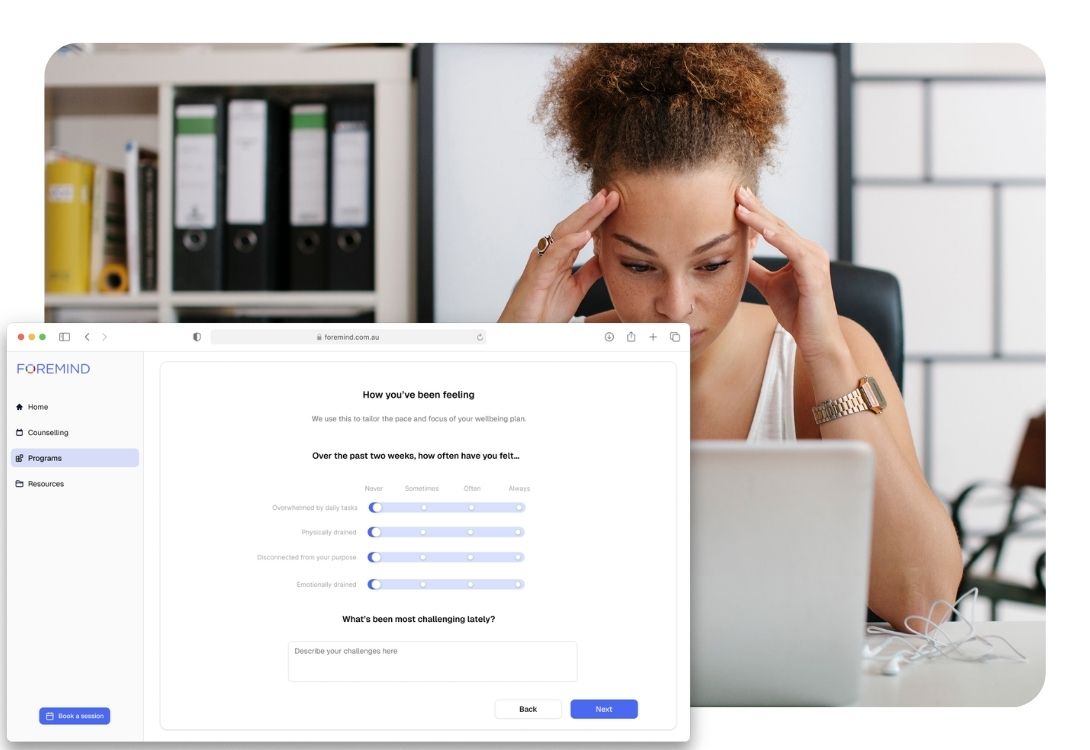
Most people know something is off well before they'd book a session.
Between those two points there's usually nothing - so they wait, and it gets worse. The check-in fills that gap.
Ten clinically validated K10 questions, ninety seconds, on their own phone, in their own time.
It isn't a conversation and it isn't a referral. It's a way to find out where you're sitting without telling anybody you wanted to know.
A score, and a next step

The score is mapped against the K10 scale straight away, with a plain-English read on what it means.
From there the platform suggests a next step matched to the result - a wellbeing resource, a counsellor booking, or a crisis line where immediate support is needed.
Taking it is entirely their call. Plenty of people check in, see they're travelling alright, and do nothing. That's a good outcome too.
Client testimonials

Natasha Tufenkjian
HR Manager, Fighting Chance
The counselling service has been amazing, and our employees have been super impressed by their sessions

Jo Livingston
Indesco HR Manager
Foremind provides a very personal, responsive service and has a wide range of resources available to support our employees. The personal approach Joel and the team add shows they understand the industry and best ways to support workers inside of it.

Deborah Lockart
Manager of Risk & Compliance RHM Consultants
It is an absolute win for our industry that Foremind are advocating, leading and delivering a much needed service. What is even better is that they do it meaningfully and with passion

Fiona Parson
Owner, Spotted Frog Kindergarten
I've noticed that the team's morale has been at an all-time high this year, and I think a lot of that has come from having a service like Foremind in place.

Georgina Byron
CEO at The Snow Foundation
Foremind’s work is inspirational. We are all interested in improving positive mindsets and wellbeing.. and workers don’t always have the opportunity to have that wellbeing check in. There’s not that culture of putting your hand up and saying you’re not okay.

Phil Cameron
Area Environmental Managing Director
Ive been able to visibly notice a change in energy and productivity in the office since engaging Foremind, the onboarding and initial training were so fantastic we decided to do it quarterly.

George Chukwukezie
HR Manager, Vacenti
“Having the ability to provide support for our staff has been really beneficial. The feedback we always hear is how easy it is to book a session. They can go in, look at who is available and book it in quickly. It's been really great.”— George, Vacenti

The counselling service has been amazing, and our employees have been super impressed by their sessions
Foremind provides a very personal, responsive service and has a wide range of resources available to support our employees. The personal approach Joel and the team add shows they understand the industry and best ways to support workers inside of it.
It is an absolute win for our industry that Foremind are advocating, leading and delivering a much needed service. What is even better is that they do it meaningfully and with passion
I've noticed that the team's morale has been at an all-time high this year, and I think a lot of that has come from having a service like Foremind in place.
Foremind’s work is inspirational. We are all interested in improving positive mindsets and wellbeing.. and workers don’t always have the opportunity to have that wellbeing check in. There’s not that culture of putting your hand up and saying you’re not okay.
Ive been able to visibly notice a change in energy and productivity in the office since engaging Foremind, the onboarding and initial training were so fantastic we decided to do it quarterly.
“Having the ability to provide support for our staff has been really beneficial. The feedback we always hear is how easy it is to book a session. They can go in, look at who is available and book it in quickly. It's been really great.”— George, Vacenti
Not a generic wellbeing quiz
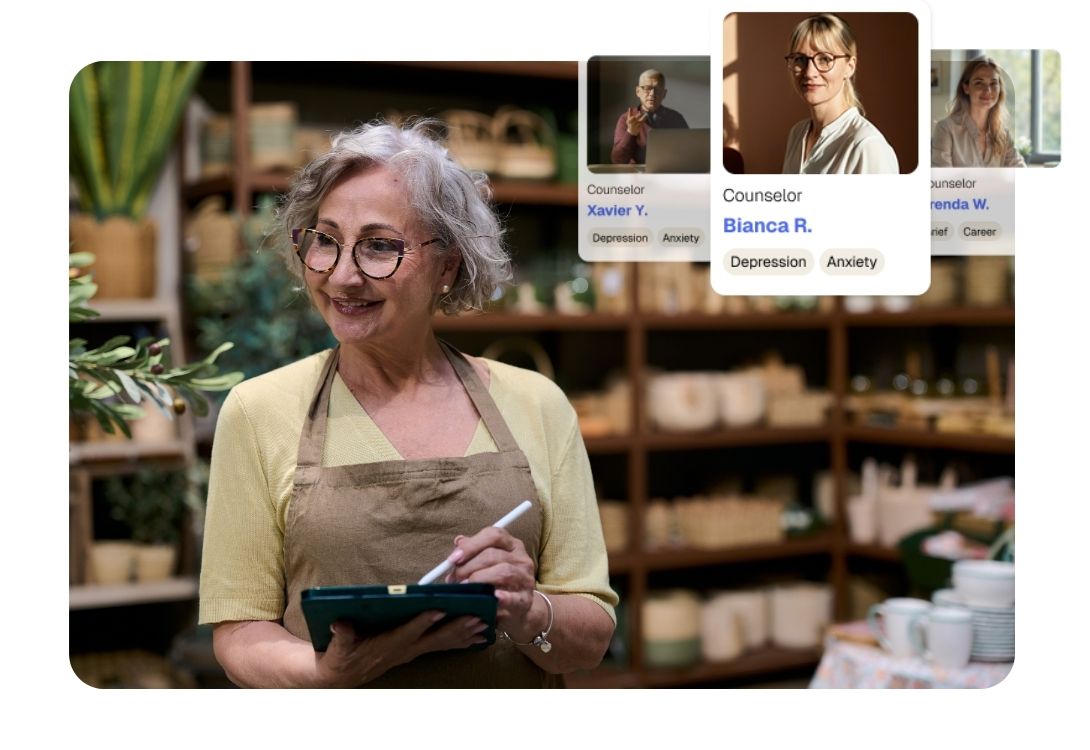
The K10 is a ten-question measure of psychological distress. It asks how often you've felt certain things over the past four weeks and gives you a score between 10 and 50.
It's used in Australian general practice and in the ABS National Health Surveys, so the result means the same thing here as it would anywhere else.
Ninety seconds to complete, and a number that's actually recognised.
Managers see patterns, not individuals
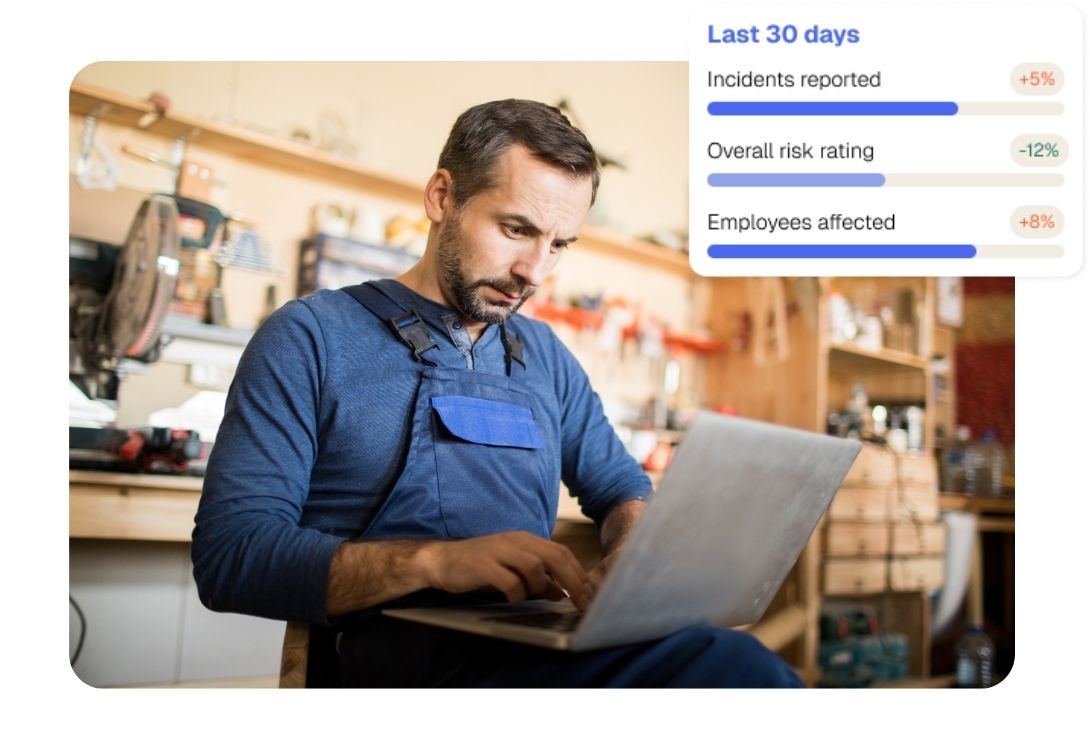
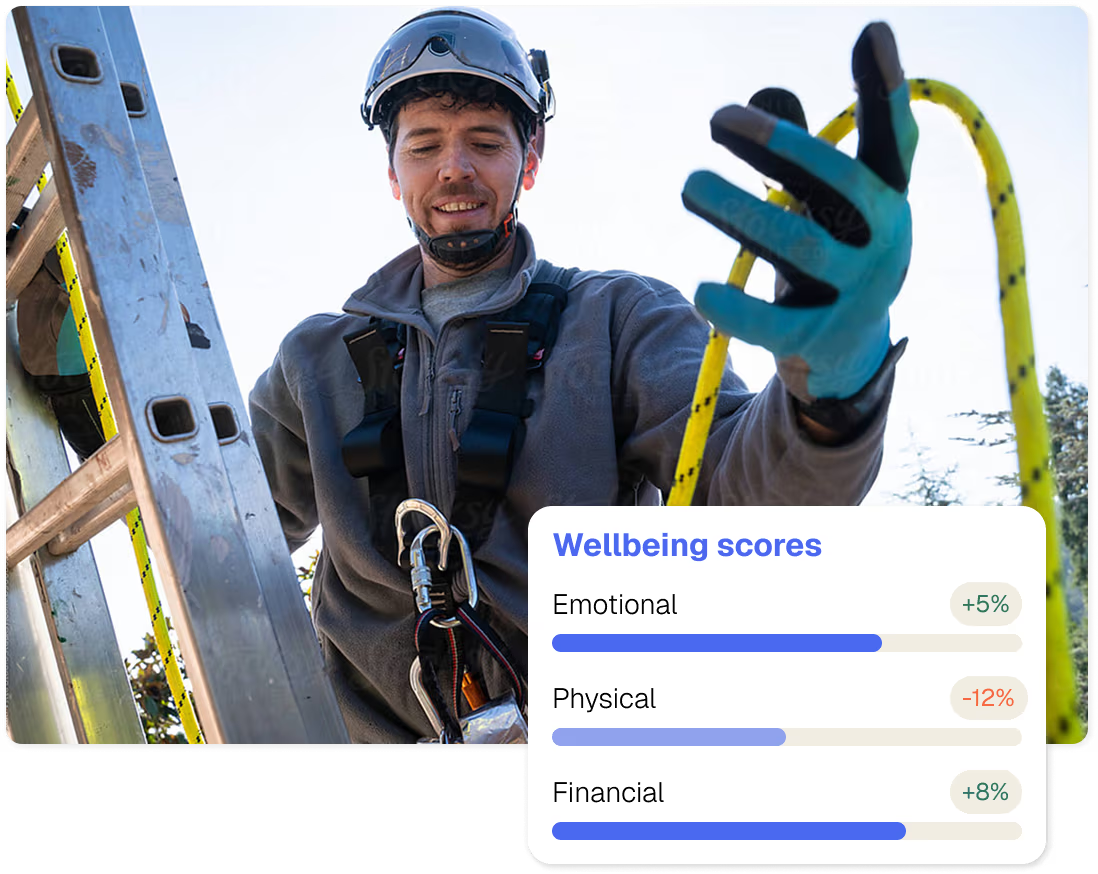
Managers never see an individual result.
What you see is the shape of it: check-in volumes and score distributions across sites, departments and shifts, only ever surfaced once a group is large enough that nobody can be identified.
Where distress clusters, you can act on the team rather than the person - book a counsellor, log a hazard, adjust a roster.
Submissions are timestamped and exportable, so the record exists when a regulator asks.
A way to check-in before burnout hits
The people most at risk are usually the last to book a session. A check-in they can do privately, on their phone, without telling anyone, reaches them earlier than a phone number on a poster ever will.
And when enough of your workforce uses it, you get a view of where pressure is building that doesn't depend on anyone volunteering bad news.
See how it works with a quick demo.
Ninety seconds
Ten clinically validated questions, anyone can do on a break.
A next step, if they want one
Every result comes with a recommendation attached. Taking it is up to them.
Patterns, not people
Results are never tied to a name. You see which teams are under pressure, never who.
FAQs
Not sure if Foremind is right for your team? Book a 15-minute call and we'll answer everything.
Yes - all content is reviewed by qualified mental health professionals. The library supports self-help and learning, but is not a substitute for professional care.
Browse by topic or format, or use the search bar. Not sure where to start? Our curated collections are a good first step.
The staff member receives an immediate prompt with a clear next step = whether that's booking a counsellor, accessing a resource, or reaching out for support. They're never left with a score and no direction.
No. Check-ins are voluntary and completed entirely on the staff member's terms.
Got 20 mins to see if Foremind suits your site?

Not ready to talk? Fair play.
Download our one-pager to share with your team first.